Recycling
All of the recyclable materials from Bracknell Forest, Reading and Wokingham Borough Councils’ kerbside collections (cans, plastic bottles, plastic food pots, tubs and trays, paper, card, tins, empty aerosols and food and drink cartons) are transferred to the Material Recycling Facility in Reading.
The material is separated using a combination of manual and automatic processes, including magnets, conveyor belts and lasers, before being baled up and sent to private companies – places like paper mills or plastics recycling plants where they are recycled and made into new products.
Our MRF is able to recycle 20,000 tonnes of recyclables every year.
All other recyclable materials that are brought to the recycling centres (ie. metals, wood, electricals ) are sorted and transported to the various companies for recycling.

Materials Recycling Facility
The recycling collected from Bracknell Forest, Reading and Wokingham Boroughs is sorted by the Materials Recycling Facility (MRF) in Reading.
- Deposited material is loaded into the MRF and onto the conveyor belt system.
- Pre-sort cabin – manual removal of large wrong items placed in the recycling containers that could otherwise damage machines.
- Sorting in trommel.
- Paper sorting by a vacuum, called an air knife.
- Food and drinks cans sorting – magnet and eddy current separator.
- Plastic sort using optical sorters.
- Baling and preparing materials for transport and further reprocessing.

The material sorted at our facility is sent to reprocessing companies to be turned into new materials and products. Some of these recycling markets are in the UK while others are based outside of the UK. The recycling gets sent to where there is a reliable and financially sound market for the materials.
At present, we are fortunate that over 80% of our material is process in the UK, including all plastics. The materials sorted at our facility get turned into a vast range of products, from kitchen appliances, to toys, clothes and packaging.
Common items of contamination found in recycling bins include plastic carrier bags, glass bottles and jars, wires, wet cardboard, textiles, videotapes and food waste. If these items are not removed, they can cause damage to the sorting machine, which can lead to expensive repairs and downtime.
While the sorting machine is capable of removing some of these items, much of the contamination is removed manually by the staff working on the site.
Waste that cannot be recycled is either used as fuel to generate electricity at the energy from waste incinerator in Lakeside, or sent to landfill.
[cookie]
[/cookie]
Garden Waste
All green garden waste collected at re3 recycling centres, as well as that from kerbside collections, is taken to composting sites. The green waste is composted in long heaps called windrows for 12 weeks and turned so it breaks down evenly.
The finished product is re3grow, a high quality, peat-free compost (PAS100 accreditation). re3grow is available for residents to purchase during spring and summer months at both Recycling Centres, directly from the “meet and greet” teams at a competitive price – £4.20 per 40L bag or as a multi-deal offer of 3 bags for £12.
re3grow is an ideal example of circular economy, showing residents how their waste is a resource which is recycled into something useful.
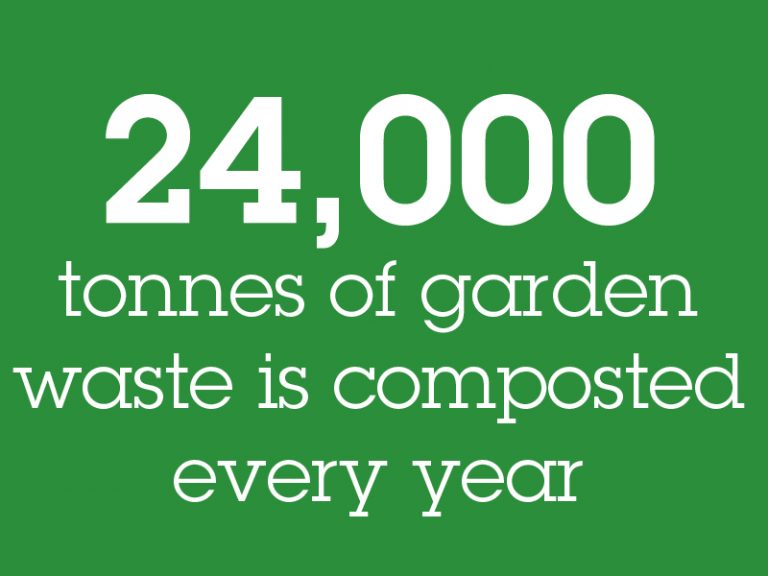
We process 24,000 tonnes of garden waste material every year.
Rubbish
Most of the non-recyclable waste collected from homes in Bracknell Forest, Reading and Wokingham Boroughs is taken to the Energy from Waste facility located in Colnbrook.
This facility safely incinerates the waste and uses the heat from this process to create steam, in turn generating electricity which is fed to the National Grid.
The household waste currently landfilled is mainly bulkier items delivered to recycling centres, but we are working to address this further and move as close to zero landfill as we can. Last year we sent less than 12% of household waste to landfill and this number decreases each year.
Each year these Energy from Waste facilities create the same amount of electricity to power 50,000 homes.

Food waste
Food waste is collected and transported to the Anaerobic Digestion facility in Oxfordshire. In the digesters, the food waste is broken down by bacteria, creating a gas called methane. This gas is captured and used to create electricity. The plant produces 2.4MW of electricity continually, which is enough to power 4,800 homes. In addition, the food waste break down into a liquid fertiliser, rich in nitrogen, used into fields to improve the soil and help grow crops.
The plant recycles 50,000 tonnes of solid food and liquid waste and captures 4.5 million cubic metres of methane gas each year.

[cookie]
[/cookie]
Annual Environmental Reports
re3 aims to manage the waste collected from Bracknell Forest, Reading and Wokingham in the most sustainable way possible.
To find out more about how the re3 partnership has managed your waste over the last year, please view the latest Annual Environmental Report.
re3 Annual Environmental Report 2021-22
re3 Annual Environmental Report 2020-21
re3 Annual Environmental Report 2019-20
re3 Annual Environmental Report 2018-19
re3 Annual Environmental Report 2017-18
